Lately I've been having anxiety going on twitter or Instagram.
I have several accounts: a professional one that acts as a portfolio, a digital art community one, and a curated version of my life on a travel and art of living account, that could easily pass as a character from the Perfection novel. Posting is now officially seen as a full-time job, with people educating themselves on the updates from Meta and cracking the code to virality and trends. I'm not so much interested in the million views, but it's nice to show a slightly more beautiful version of my life to friends and strangers.
This performance of building an interesting character, living a fascinating and inspiring life, has of course been warped to insanity in the last few years when AI tools are being used as both content creation tools and algorithmic optimisation tools, pushing us even further to an even narrower tunnel of microtrends and core-cores. There's a question of audience, that looks passive (except for an occasional like or share), but is actually shaping the content via their preferences. I create content for friends, I create for curators, for collectors, but also for anonymous web3 participants, and strangers with whom I share seven degrees of separation. Their preferences, their experiences shape what I post and share, even if I don't want to admit that. What I live through gets transformed and packaged into an insta-ready package of short video snippets with inspiring quotes. But then also, I post my matcha latte in a carousel on the feed, and it lands next to drone strikes and hurricanes. And its meaning shifts and becomes so insignificant and pretentious.
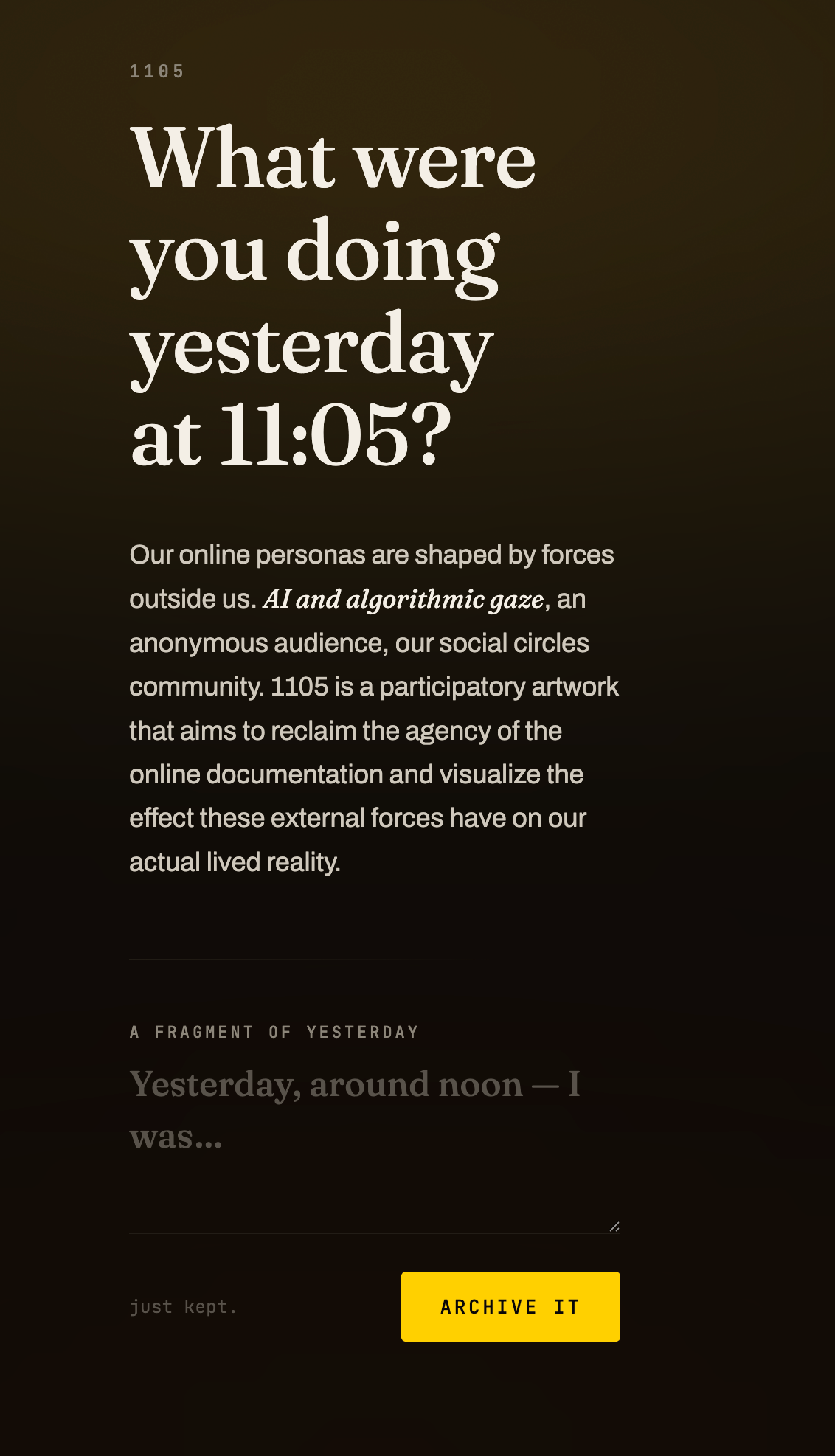
I want to go one step back. To the human and mundane. To what we were both doing yesterday at 11:05. How insignificant (or marvelous) that moment was. Perhaps it was one of these moments where we say we should just stop and enjoy the little life in it, but we never do. Those experiences were raw and true and not AI-generated. But when they become part of the artwork, they become packaged and slopified and surreal. The moment starts in reality, but then drifts to an obvious confabulation of latent space. We ask where was the slipping point, when did it drift away and stop being about us? I want to reclaim that moment while it was mundane, before it slipped into "mean image" territory, as Hito Steyerl would say.
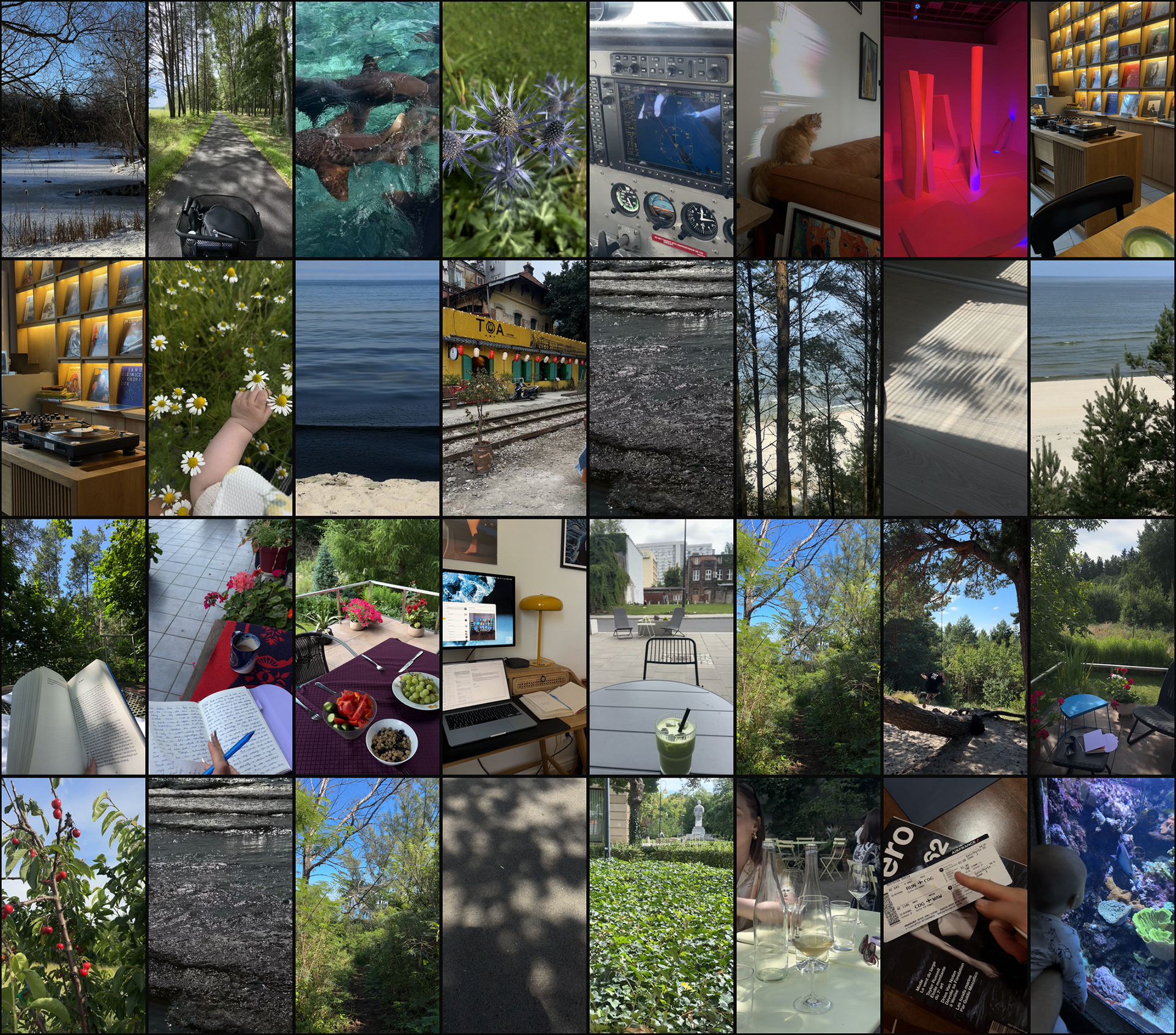
For a period of a few months I had an alarm clock on my phone that called at 11:05 in the morning. It was my cue to record a few-second video of something interesting around me, in a manner not unsimilar from an app popular some time ago. I collected these moments, and it helped that during the summer I spent a lot of time in nature, at my parents', by the Baltic Sea, or the Indian Ocean. The tension between nature and technology is something I feel a lot as a millennial, so the recurring nature theme seemed quite fitting for the project.
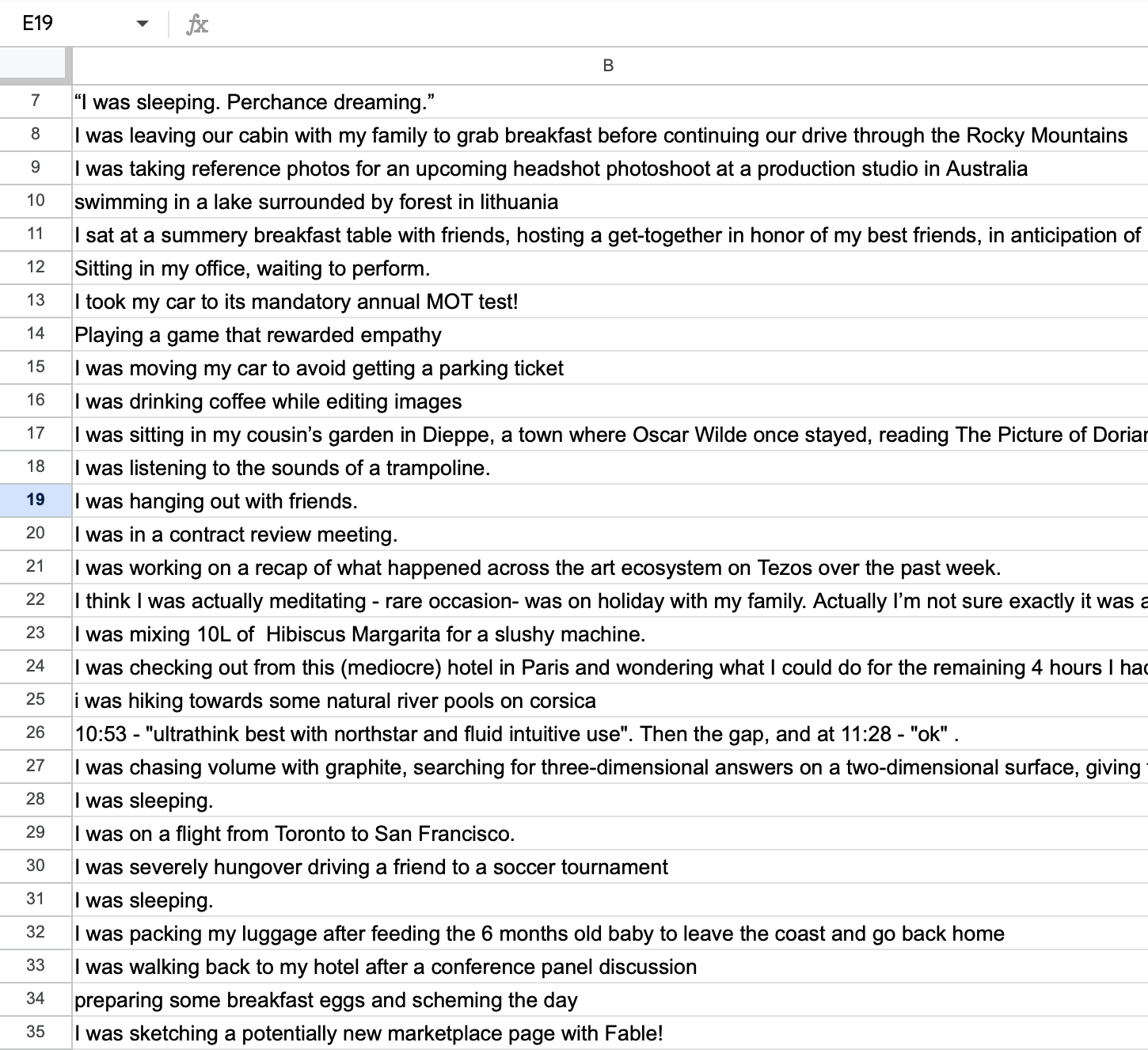
At the same time, I started asking friends and acquaintances on social media about their personal memories. Not aligned to a specific date, but rather a recollection that is still fresh in memory, but requiring minimal effort to pinpoint in time. Something that should still sit fresh in the memory, as it's such a recent day, the day before. But at the same time, very often such an insignificant action that it would go forgotten if someone were trying to remember it, say, a week from now.
In addition to memories collected from my very own bubble circle, I allowed an anonymous form to circulate online. Curious to see how and whether these anonymous records might differ. Similarly to how our comments and activity online are different when we are anonymous. We are more frank, but also we just stop pretending. And allow ourselves to say banal things, to admit how insignificant a moment it was, in-between things, something that did not merit documenting.
Finally, while we were living our realities, at 11:05 things were happening in the "big" world. Major and minor, changing history. Another wider angle to look at the past moment.
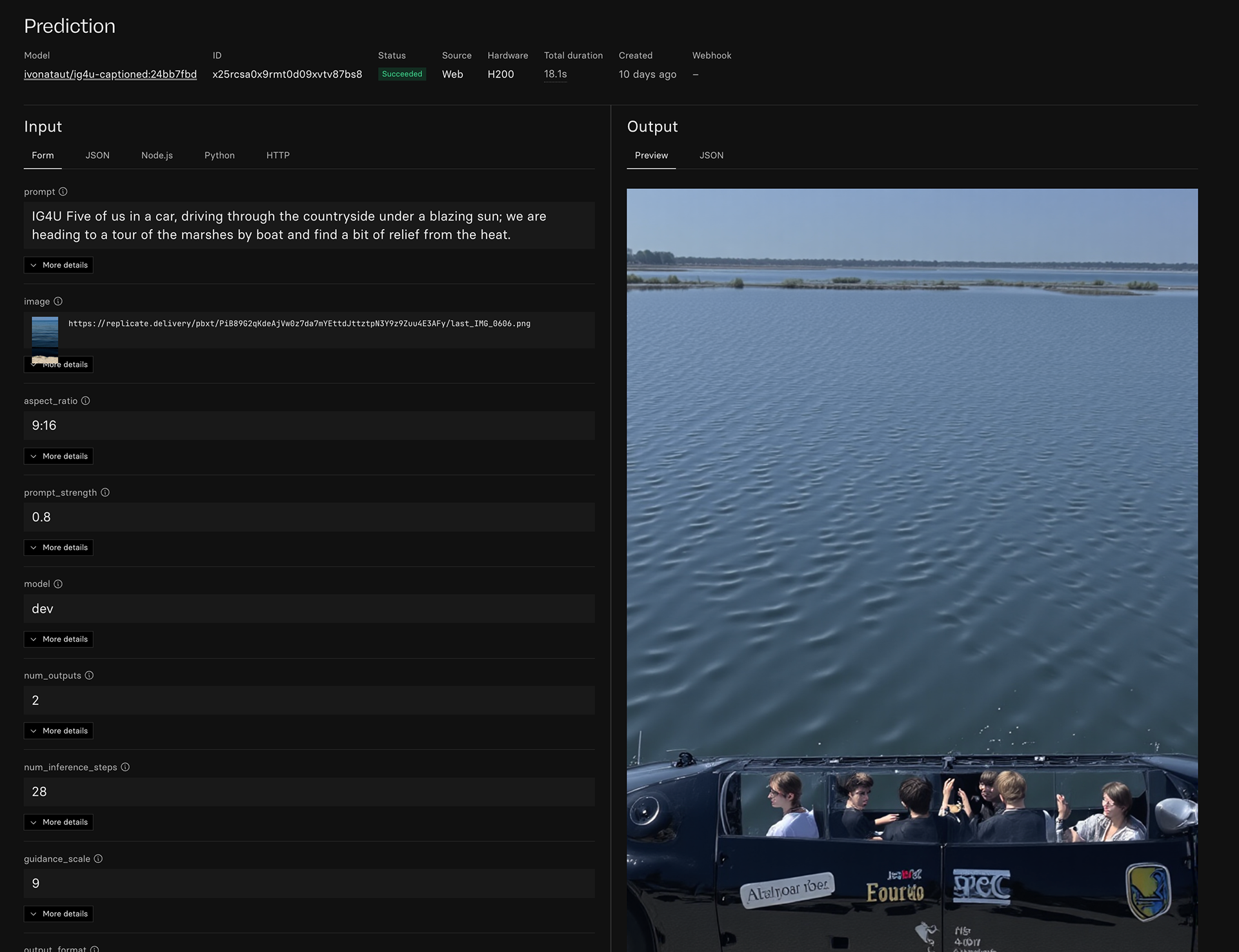
By using these input videos, images, and memories in text form as "prompts", I also want to bring back into light the question of training data. When talking about AI slop, we tend to focus on the outputs of systems and technology itself, but there really is no such thing as AI slop. It's just an averaged representation of what was fed into these systems at scale. The data was real, but maybe it was also polluted. Maybe the internet was already slop before we started training AI on it?
The community prompts guided the images into unexpected territory, merging our communal experiences into collective form (similar to how AI training works) and shifting from my reality to "yours". After creating the end points, I used open-source video models, finetuned on my data, to create a smooth interpolation between them.
The AI models I used were finetuned on a dataset I made by screen-recording around forty minutes of my own social media feed and cutting it into fifty eight-second clips of scroll motion. The accounts in this dataset are listed under Training data below.
The entire dataset used for training of the model consists of screen recording divided into 50 8-second clips.
While the works I created for the AOTM collection were heavily curated by me, hand-picking the best-fitting narrative and matching community prompts with images, what I built is actually a system capable of working on its own. A synthetic documentation system capable of running an agentic pipeline, feeding off my everyday life and preparing a fabricated persona, ready to be posted online. I will be publishing this system as well, in the next chapter of the project, building an installation that allows the audience to guide my fake persona.
APPENDIX : Training data
The video model was finetuned on my own Instagram For You feed (@ivonatau). I screen-recorded around forty minutes of scrolling through Reels, content chosen for me by a recommendation system, and cut fifty eight-second clips from the passages where the feed was moving. The interface stays in every frame: handles, captions, like counts, Follow buttons, ad labels.
50 clips · 8 seconds each · 400 seconds in total · 544 × 960 px · 24 fps · trigger word SCRLFEED
These are the 156 accounts whose posts make up the dataset selected by the algorithm:
Accounts
4acoeur · adamfreediver · adamfuhrer · adrienbugeaud · aimene_minou19 · albertoessesi · ale.angalan · alexandrasophiearts · ali.m.demirel · amiliascott · andrade_schimmelpfeng · andrey_badawi · ange1gur1 · anna.zhang · ari__angkasa · aristides.lab · art · artdrunk · artlove.n.us · artrabbit · athos.argue · atmos · atriomagazine · bannchen · benlookingatart · bfophoto · broadsheet.london · bureauforlistening · candela550_ · caorline · ceilingservice · cetkhup2 · cherylappe_art · chingarchitecture · colasa · cur8.ldn · damonxart · danielhjeffery · daydreamtoronto · demauricio_ · designby.lera · diaartfoundation · differentchairs · donalleniii · dooxthao · ed.creativecoder · eel_kim · eleolen · emptybox.lab · esdevlin · eva_and_jorik · evanreesejohnson · everydaywitheandj · freediving.australia · gastonwelisch · grayskiesforever · hintenauchmith · hiroakinakaj · hooper.studio · iloveminimaldesign · infinite_mantra · inkova · intervals.exhibition · jaimetoutcheztoi · joemortell · joeva.photo · joltza · julian_hespenheide · kbduke.tech · kid_soup · kitvolta · leoniedolige · liagrahammusic · lukaxjuric · lulu_macdonald · malik.url · marshmallowlaserfeast · mekanphotography · module.exchange.france · momluxled · monica.ibarra_ · moodboardmafia__ · moonseopseo · moritz__otto · movies.capsule · nicholaspjm · nina.nayko · nonoti.machine · notaphasemag_ · nowhere_watcher · nytcooking · obscurecomposers · open.architecture · paulinefoessel · peppes_ghost · perspek.steven · promptzi · rains · redondo_estudio · reframe.camera · rem_owl · rendahmag · richardsidey · shannyk_p · shihua_ma · shozabraza.design · spence.r.chang · steffeleoff · stopasriel · suave.ooo · taisie · tasyademin · technology · theartistbreakfast · thedesignely · theharrisalterman · tiat.place · tigermountain_books · tinakimgallery · venera_kazarova · verakogelnik · vladsgn · w.schimmelpfeng · waaaaayne · waferhero · wallbychance · whale.archive · wideawakearthquake · yasamin.aharipour · yue.cho
Sponsored and promotional posts
actionpolska · biedronka · braciasadownicy · flysas · forwardfestivals · fujifilmpolska · garnierpolska · granda.coffee · hm · hmhome · inpostpl · kiciabistro · lidlpolska · matiswiecicki · nytimes · philipshomelivingpolska · pkobp · sailyworld · sektor6d.pl · slowhop_com · vanish_polska · victoriabeckhambeauty · winiary · yesim · yvesrocherpolska · zalando